
This article is intended solely for educational purposes. Please consult a licensed veterinarian for specific treatment plans.
Are You Giving Your Dog the Right Supplements?
A Guide That Clearly Explains "Functions, Necessity, and Common Misconceptions" All at Once
Pet health supplements on the market are becoming increasingly specialized: for joints, for digestion, for skin, for brain health...
But many parents actually have only one question on their minds:
👉 Does my dog really need it?
Keep this general rule in mind: If you’re not lacking, don’t make up for it.
The following is a detailed guide based on age groups and supplement types.
🐶 Puppy stage (2–12 months)
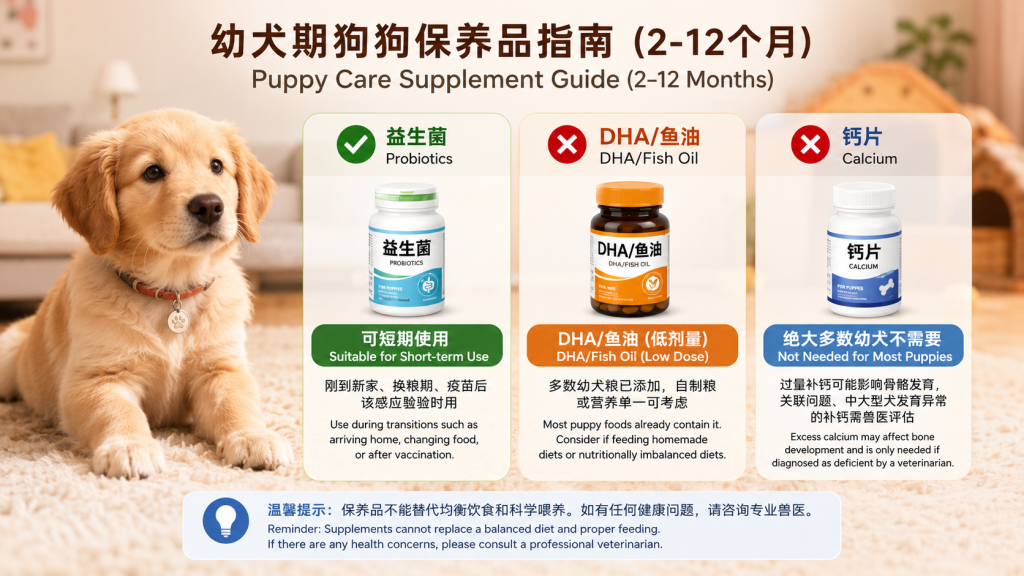
During this stage, the skeletal and immune systems develop rapidly, so it is especially important to avoid over-supplementation.
Probiotics should only be used for a short time during periods of stress, such as when your pet first comes home, when switching to a new diet, or after vaccinations. If your pet is healthy, don’t give them probiotics every day.
Fish oil is already included in most puppy foods, so there's no need for a separate supplement.
Be especially cautious with calcium supplements! The vast majority of puppies do not have a calcium deficiency, and indiscriminate supplementation may actually hinder bone development.
📌 Do not feed them unless a veterinarian has diagnosed a calcium deficiency.
🐕 Adult dogs (1–7 years old)
At this stage, your body is stable, and the key to taking care of it can be summed up in two words: maintenance.
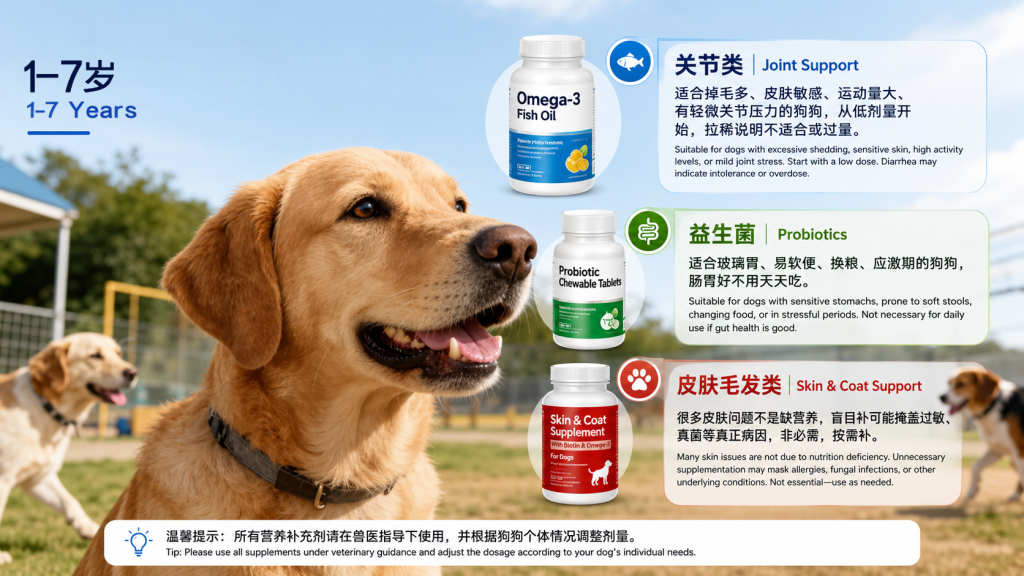
Fish oil is suitable for dogs that shed heavily, have sensitive skin, or are very active. Start with a small dose; if your dog has diarrhea, it means the product isn’t suitable or that you’ve given too much.
Joint supplements aren’t necessary for healthy small dogs. However, they can be given in advance to medium and large dogs, overweight dogs, and dogs that love to climb stairs.
Probiotics: Use them only when you have a sensitive stomach or loose stools. If your digestive system is healthy, taking them every day is a waste.
A reminder regarding skin and hair issues: Many skin problems are not caused by nutritional deficiencies. Blindly taking supplements may mask the true causes of allergies and fungal infections.
🐕🦺 Senior dogs (7 years and older)
With joint degeneration and declining digestion and nutrient absorption, this is precisely when health supplements come into their own.
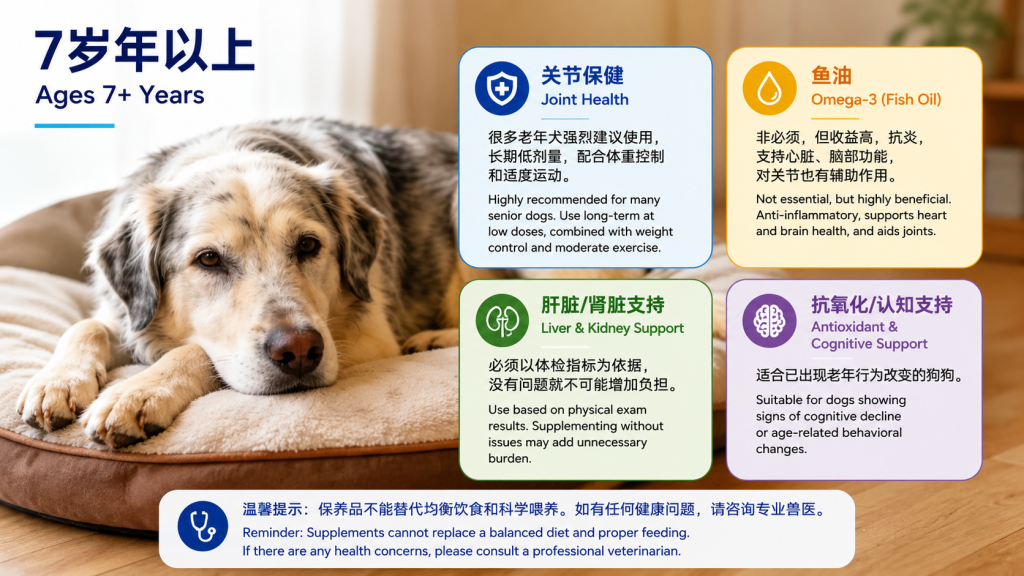
Joint supplements are suitable for many older dogs. They should be given in low doses over the long term, along with weight management and moderate exercise.
Fish oil helps reduce inflammation and supports heart and brain health.
For liver and kidney support supplements, you must review your medical exam results. Taking them indiscriminately when there’s no issue can actually put an extra strain on your body.
Antioxidant and cognitive support supplements are intended for dogs that are already showing signs of age-related behavioral changes.
🧠 To wrap things up, here are three points:
• Puppies: Don't supplement unless necessary.
• Adult dogs: Supplement as needed, not based on trends.
• Senior dogs: Targeted supplementation
Scientific dog care means treating supplements not as “insurance,” but as a supportive tool.
If you’re unsure, be sure to consult your veterinarian first before deciding whether to give supplements and, if so, which ones.
This article is reprinted from my WeChat official account, “VetLog,” and was originally published on December 29, 2025.

Author

lisaxia@vetlog.net
Related Articles

Guide to Pet Cremation Services
Disclaimer: This guide is provided for informational purposes only and is intended to help pet owners understand the options available for cremation services...
Read all
Guide to Finding a Lost Pet
I. Basic Response Measures 2. Prioritize Handling Cases of Pets Lost Outdoors If a pet goes missing outdoors, it is recommended that...
Read all
Newbie looking to buy a dog? Step-by-step guide to getting a healthy puppy‼️
Do you feel anxious when choosing a dog? This article takes several factors into account and outlines...
Read all
Have you also experienced the puppy blues?
This article teaches you how to relieve anxiety when caring for a puppy. Puppy blues...
Read all
A Comprehensive Guide to Early Warning Signs of Common Dog Diseases
Is it hard to tell if your dog is healthy when you're a first-time owner? This is a guide to common dog health issues...
Read all